Best Roof Types for Pensacola Coastal Homes
Discover which roofing materials hold up best against Pensacola's unique mix of salt air, high humidity, and hurricane threats.
Roofing in Pensacola’s Coastal Environment
Living near the coast in Pensacola comes with incredible views, ocean breezes, and beautiful neighborhoods — but it also creates one of the harshest roofing environments in the country.
Your roof is constantly exposed to:
- Salt air corrosion
- High humidity
- Intense UV radiation
- Heavy rain
- Hurricane-force winds
- Wind-driven debris
- Rapid temperature swings
- Mold and algae growth
Many roofing systems that perform well inland fail much faster near the Gulf Coast. That means choosing the right roof in Northwest Florida is not just about appearance — it is about durability, storm resistance, insurance protection, and long-term cost savings.
What Makes Coastal Pensacola Roofs Different?
Homes in coastal areas like Pensacola, Pensacola Beach, Navarre, Gulf Breeze, and Perdido Key experience significantly more stress on roofing systems than inland homes.
Salt Air Corrosion
Salt accelerates rust and deterioration of metal components, fasteners, flashing, vents, and exposed hardware.
Hurricane Wind Uplift
Roof systems must withstand extreme uplift pressure during tropical storms and hurricanes.
UV Damage
Florida’s sun breaks down roofing materials faster than in many other states.
Moisture & Humidity
High humidity promotes algae growth, wood rot, and hidden moisture intrusion.
The Best Roof Types for Pensacola Coastal Homes
1. Standing Seam Metal Roofing
Standing seam metal roofing is widely considered one of the best roofing systems for coastal Florida homes.
Why It Performs So Well:
- • Excellent wind resistance (140–180+ mph)
- • Long lifespan (40–70 years)
- • Fewer exposed fasteners
- • Superior rain shedding
- • Resistant to algae and mildew
Key Coastal Advantage:
Unlike screw-down metal roofs, standing seam systems conceal most fasteners, reducing water intrusion and corrosion risk.


2. Architectural Asphalt Shingles
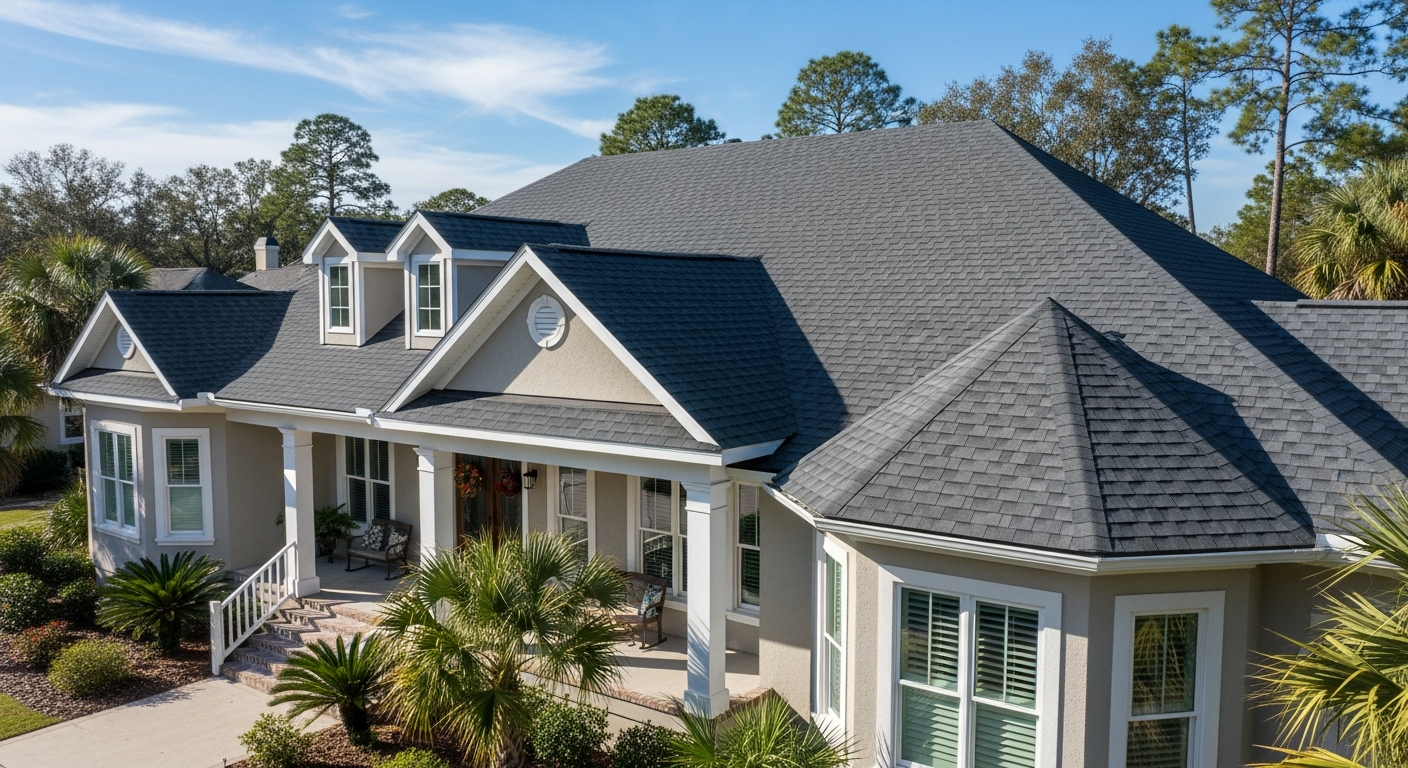
Architectural shingles remain the most common roofing system in Northwest Florida. Modern high-wind shingles perform far better than older 3-tab systems.
Why Homeowners Choose Them:
- • Lower upfront investment
- • Wide color selection
- • Easier repairs
- • Strong manufacturer warranties
Important:
Not all shingles are equal. In coastal Florida, look for:
- • 130 mph wind warranties
- • Algae resistance
- • Enhanced nailing patterns
3. Concrete Tile Roofing
Tile roofs are common on higher-end coastal homes and Mediterranean-style properties. They perform extremely well against UV exposure and salt air.
- Expected Lifespan: 40–75+ years
- Extremely long lifespan and fire resistant
- Requires structural engineering due to weight
4. Synthetic Roofing Systems
Synthetic roofing materials are becoming increasingly popular in Florida. These systems mimic slate, cedar shake, or tile while providing lower weight, improved impact resistance, and better wind performance.
5. Polyglass® Roofing Systems
Why Pensacola Homeowners Are Choosing Polyglass
While most homeowners focus on the shingle they can see, the underlayment system beneath it is equally critical — especially in Florida's hurricane-prone coastal environment. Polyglass® manufactures some of the most advanced waterproofing and roofing underlayment systems in the industry, engineered specifically for severe weather climates like Northwest Florida.
Polyglass roofing membranes serve as the critical secondary water barrier between your roof deck and your outer roofing material. If shingles or panels blow off or become compromised during a hurricane, a Polyglass system continues to protect your home from water intrusion.
Polyglass Product Lines for Florida Homes
POLYSTICK® MTS Plus
A self-adhering, cold-applied modified bitumen membrane. Provides outstanding adhesion to roof decks and serves as a superior secondary water barrier. Ideal for Florida coastal homes where wind-driven rain is a constant threat.
POLYSTICK® TU MAX
An ultra-high-performance self-adhering underlayment with reinforced glass mat. Engineered for high-velocity hurricane zones, providing superior tear resistance and superior waterproofing in the most extreme conditions.
ELASTOFLEX® S6 G
A fiberglass-reinforced APP modified bitumen cap sheet offering exceptional UV resistance and long-term waterproofing performance. Designed for Florida's intense sun exposure and high heat environments.
POLYSTICK® IR-Xe
A mineral-surfaced, self-adhering cap sheet with outstanding reflectivity. Helps reduce attic heat loads, lowering cooling costs — a major benefit in Northwest Florida's brutal summer heat.
Why Polyglass Underlayment Matters More in Pensacola
Traditional roofing felt paper was the standard underlayment for decades. In inland climates with mild weather, it performs adequately. But in Pensacola — with hurricane-force winds, wind-driven rain, salt air, and extreme UV exposure — felt paper fails faster and provides far less protection.
Modern Polyglass systems are self-adhering, meaning they seal directly to the roof deck without relying on nails alone. This dramatically reduces the risk of water infiltration if the outer roofing layer is compromised during a storm.
Key Benefits of Polyglass Systems for Northwest Florida Homes:
- ✔ Self-adhering membranes create a watertight seal even if shingles blow off
- ✔ Superior resistance to wind-driven rain — critical in hurricane zones
- ✔ May qualify your roof for wind mitigation discounts on Florida homeowners insurance
- ✔ Excellent UV resistance extends the life of the entire roofing system
- ✔ Compatible with shingle, metal, and tile roofing systems
- ✔ Florida Building Code compliant for high-velocity hurricane zones
At True Grit Roofing, we incorporate Polyglass waterproofing systems as part of our complete coastal roofing installations. We believe the underlayment layer is not an afterthought — it is one of the most important components in building a roof that can truly survive a Pensacola hurricane. Learn more at polyglass.us.
Metal Roof vs Shingle Roof in Pensacola
| Feature | Metal Roof | Architectural Shingle |
|---|---|---|
| Lifespan | 40–70 yrs | 18–30 yrs |
| Wind Resistance | Excellent | Good–Very Good |
| Coastal Corrosion Resistance | Excellent (aluminum best) | Moderate |
| Upfront Cost | Higher | Lower |
Need Help Choosing the Right Roof?
True Grit Roofing helps homeowners across the Florida Panhandle choose roofing systems designed for coastal performance, hurricane resilience, and long-term durability.
Need a Professional Opinion?
Stop guessing about the condition of your roof. Get a free, comprehensive inspection with full photo documentation.